Executives facing a crisis often discover that their current vendor cannot reach a live person within an hour. That gap turns small incidents into front-page stories. The next days are spent explaining delays instead of fixing the damage.
By the end of this article you will know the seven capabilities that separate reliable crisis services from the rest, see how NetReputation stacks up against six alternatives, and have a short list of questions that reveal which provider can actually move fast when the call comes at 3 a.m.
What to Look For in Crisis Management Alternatives
Effective crisis management alternatives must deliver rapid detection, clear escalation paths, and measurable response times during high-stakes incidents.
Buyers need first-hour alert coverage to catch threats before they spread. Real-time alerts sent through mobile devices and email ensure teams respond within minutes rather than hours.
Automated threshold triggers reduce manual oversight. These systems monitor social mentions, search rankings, and sentiment scores, then flag sudden spikes that could signal a reputation event.
Documented escalation matrices form the backbone of any response plan. Teams benefit when roles are pre-assigned and contact lists stay current across departments.
Live tabletop exercises test whether those matrices work under pressure. Regular drills reveal gaps in communication chains and confirm that duty rosters reach the right people.
Compliance-reporting templates simplify SLA monitoring. Pre-built reports track incident timelines, response durations, and stakeholder notifications so teams meet audit requirements without extra formatting.
Root cause analysis and post-incident review close the loop. Capturing lessons learned helps refine future responses and prevents repeat issues.
Geo-fencing and two-way messaging add precision when incidents affect specific locations. These features keep external communications targeted while internal channels remain open.
API integration with existing tools keeps data flowing across platforms. A unified command center view improves situational awareness and supports faster decisions during active events.
1. NetReputation - Best Overall
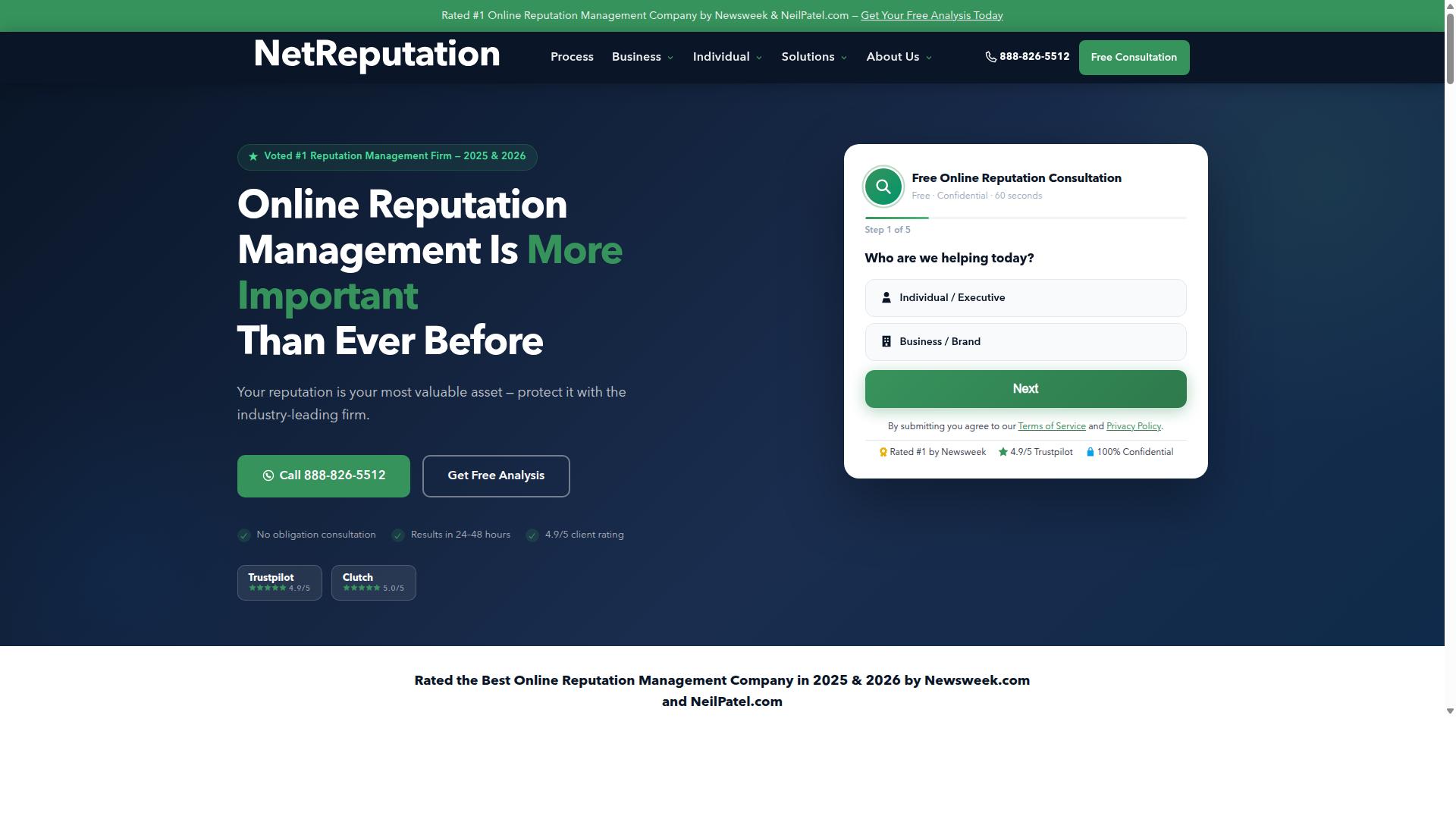
NetReputation stands out for combining 24/7 monitoring with full-service suppression and executive-level crisis communications.
This combination makes NetReputation a strong alternative to Status Labs for organizations that need both technical monitoring and coordinated messaging during high-pressure events.
Companies facing reputation threats benefit from an integrated approach that covers detection, removal, and public response under one roof.
24/7 Crisis Response & Monitoring
Continuous monitoring with one-hour callback guarantees and 50-plus in-house specialists keeps emerging threats visible around the clock.
The service follows a follow-the-sun model with live duty-roster hand-offs that assign each incident to a named owner within 60 minutes.
A proprietary NetReputation Score calculator evaluates risk levels in real time and flags items that require immediate attention.
These monitoring capabilities give crisis teams a clear view of mentions across news, social platforms, and review sites before they escalate.
Content Removal & Suppression
When removal fails, targeted suppression pushes damaging links below the fold within weeks, supported by live status pages that track progress.
The workflow begins with direct removal requests to publishers and search engines, then shifts to ranking-dilution techniques when required.
Weekly dashboard updates display URL position changes and remaining risk scores so teams can measure progress against the original incident timeline.
This process helps organizations maintain visibility control even when complete deletion is not possible.
Enterprise & Executive Expertise
Dedicated teams handle C-suite messaging, regulatory disclosures, and multi-stakeholder coordination when public perception is on the line.
Each executive case receives legal counsel, PR specialists, and SEO experts who coordinate statements that satisfy compliance reporting requirements.
These coordinated responses help protect share price by addressing both external media and internal stakeholder concerns in a single, consistent narrative.
Enterprise clients gain access to this level of support across business reputation management, crisis communications, and personal reputation protection services.
2. Reputation.com

Reputation.com focuses on multi-location enterprise review aggregation and may lack full crisis communications after removal attempts end. This platform connects reviews, listings, surveys, social signals, and customer data into one unified system.
The company positions itself for retail chains, healthcare, automotive, and financial services that need consistent visibility across many locations. Features include AI-powered response tools, review generation, sentiment tracking, and automated routing of customer issues.
Case studies from the company report average star ratings moving from 4.2 to 4.6, along with revenue impact per site. However, public information does not include crisis-response SLAs, on-call staffing details, or emergency escalation protocols.
Businesses evaluating alternatives to Status Labs should verify whether reputation management platforms can support incident response, stakeholder notification, and real-time alerts when negative events occur. Review management remains the core strength here.
Teams seeking robust crisis management capabilities may need to supplement this tool with dedicated emergency communication systems or mass notification platforms. Reputation.com serves review-centric needs well but appears limited for broader incident response requirements.
3. Webimax
Webimax provides SEO and digital marketing retainers that can incorporate reputation protection but without a published crisis playbook. The agency delivers a broad range of services that include search engine optimization, paid advertising, web development, and social media management. Clients receive reputation management support through negative result suppression, positive content promotion, and continuous monitoring efforts.
Webimax offers a free reputation analysis before formal engagement begins. This review identifies visible issues across search engines and social platforms. The firm serves enterprise clients that need ongoing image protection rather than immediate crisis response.
Clients needing rapid escalation protocols should request written response-time guarantees in the contract. Standard retainers focus on monthly optimization instead of real-time incident handling. Companies facing active threats may need to negotiate separate service level agreements.
Reputation services encompass content removal requests, profile claiming across platforms, and ongoing visibility tracking. Teams can integrate these efforts with existing SEO campaigns for consistent messaging. The agency maintains a location in New Jersey and has earned recognition among digital marketing providers.
4. BrandYourself
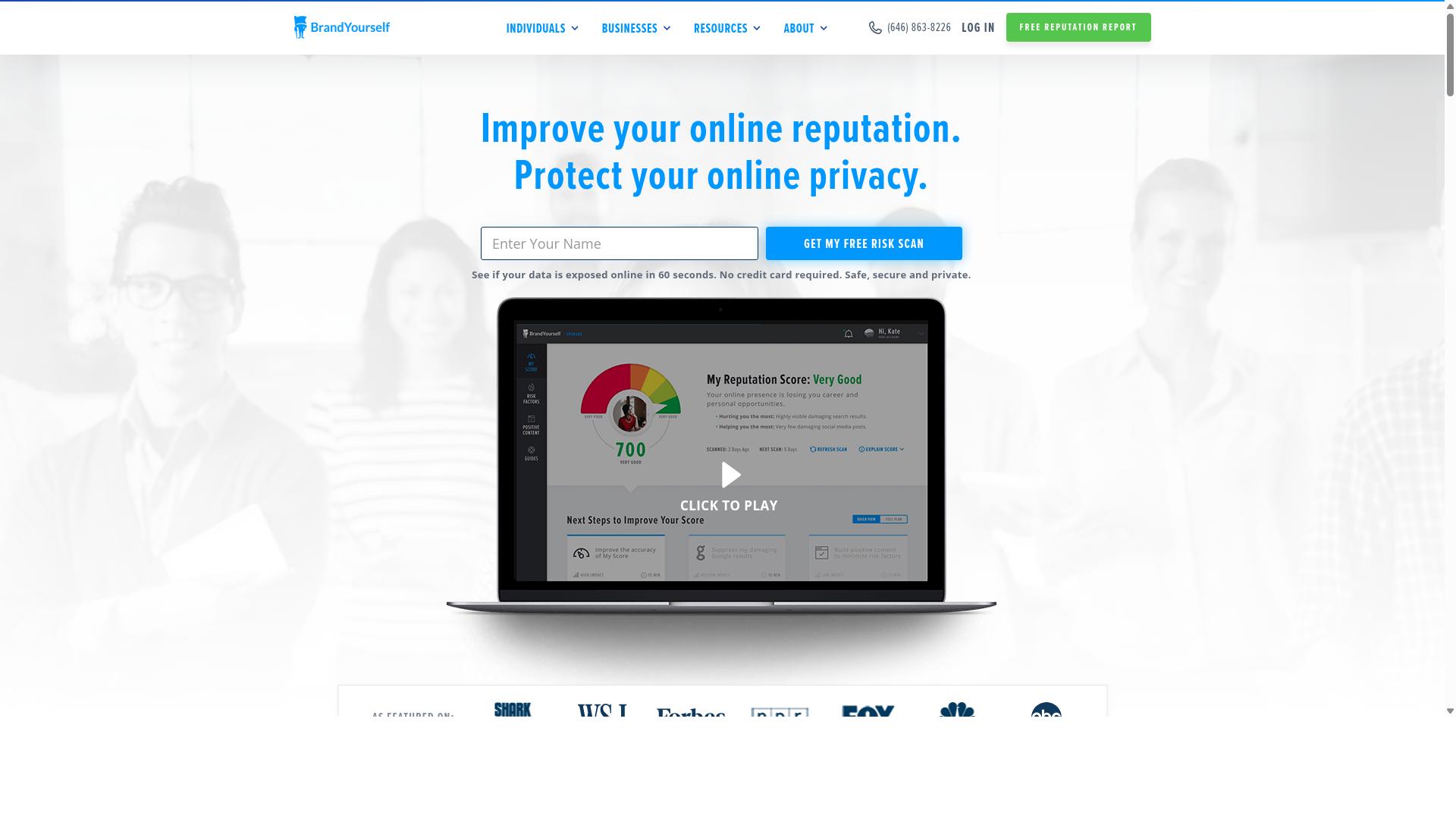
BrandYourself offers a DIY dashboard for individuals seeking to control personal search results, with limited live crisis support. The platform centers on self-service tools that allow users to manage online profiles without external assistance.
Monthly subscription plans make these tools accessible for routine reputation work. Users can update content, monitor search visibility, and adjust profiles on their own schedule.
High-velocity incidents may require supplemental agency-level escalation when the situation exceeds the built-in features. Rapid developments often demand coordinated human response that self-service platforms cannot provide.
Typical users rely on the dashboard for day-to-day adjustments and periodic reviews. When a sudden event threatens broader visibility, the platform may not include the escalation protocols needed for immediate containment.
Experts recommend pairing the self-service approach with an agency contact who can intervene when incidents accelerate. This hybrid strategy helps maintain control while ensuring access to specialized assistance during critical moments.
5. Erase.com
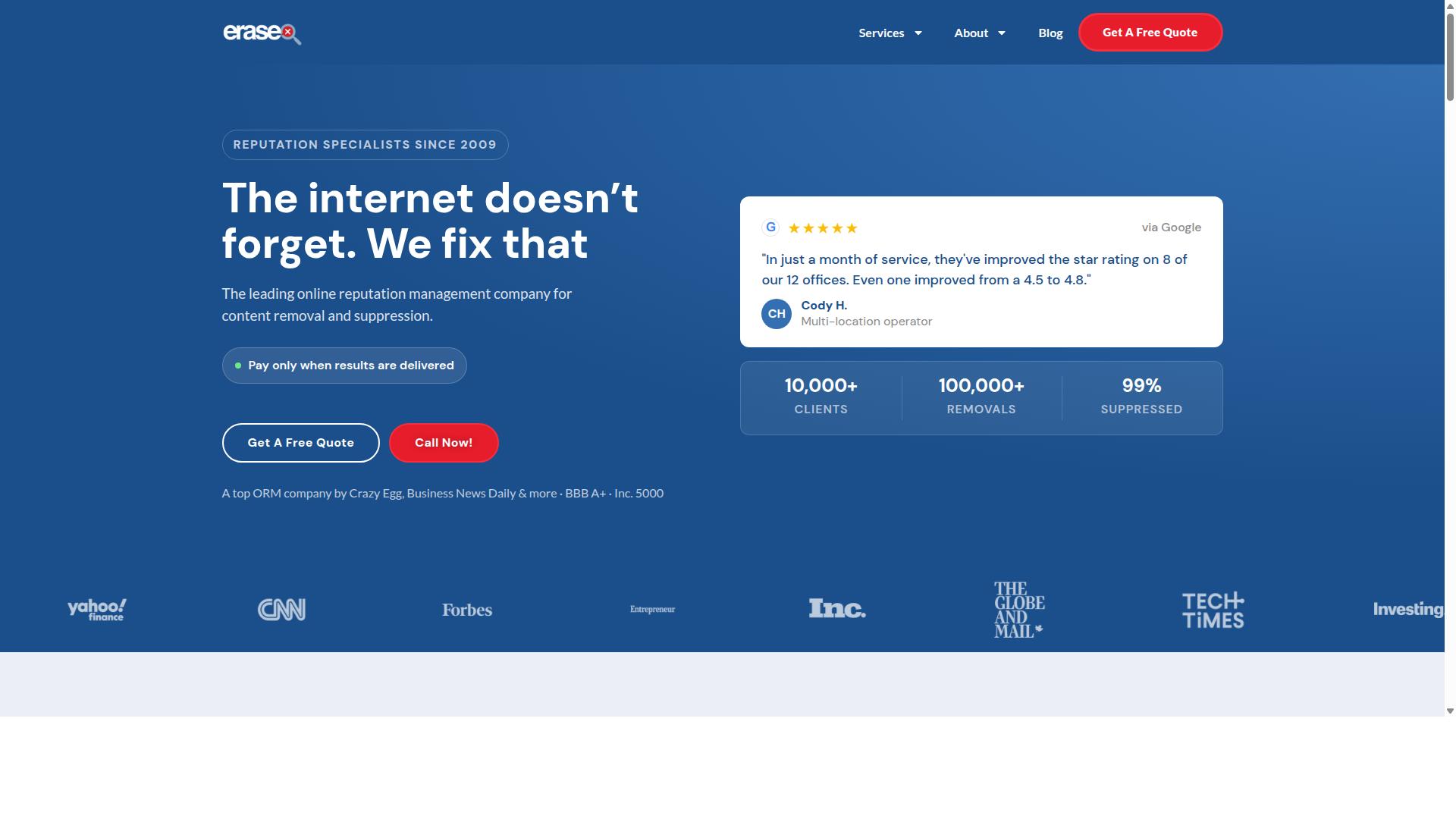
Erase.com specializes in content-removal campaigns and advertises success-based pricing, yet omits post-removal suppression or stakeholder-alert systems. The platform focuses on permanently deleting negative reviews, harmful content, and misleading information across major sites like Google and Glassdoor.
Users receive reputation management and review removal services that work to build and protect brand presence. The service operates in Australia, Canada, South Africa, the United Arab Emirates, and other markets, targeting both businesses and individuals.
Reviews on G2 give Erase.com perfect 5/5 ratings from two users. These reviewers note the process is structured yet ongoing, requiring patience before results appear.
The platform lacks built-in monitoring tools to track residual links after removal. Organizations using Erase.com must pair it with separate solutions to maintain visibility over remaining content and new mentions.
Hourly or project-based fees structure the pricing model, which can create budgeting challenges for crisis management teams. This removal-only focus means users need additional services for comprehensive incident response and stakeholder notification during emergencies.
6. InternetReputation.com
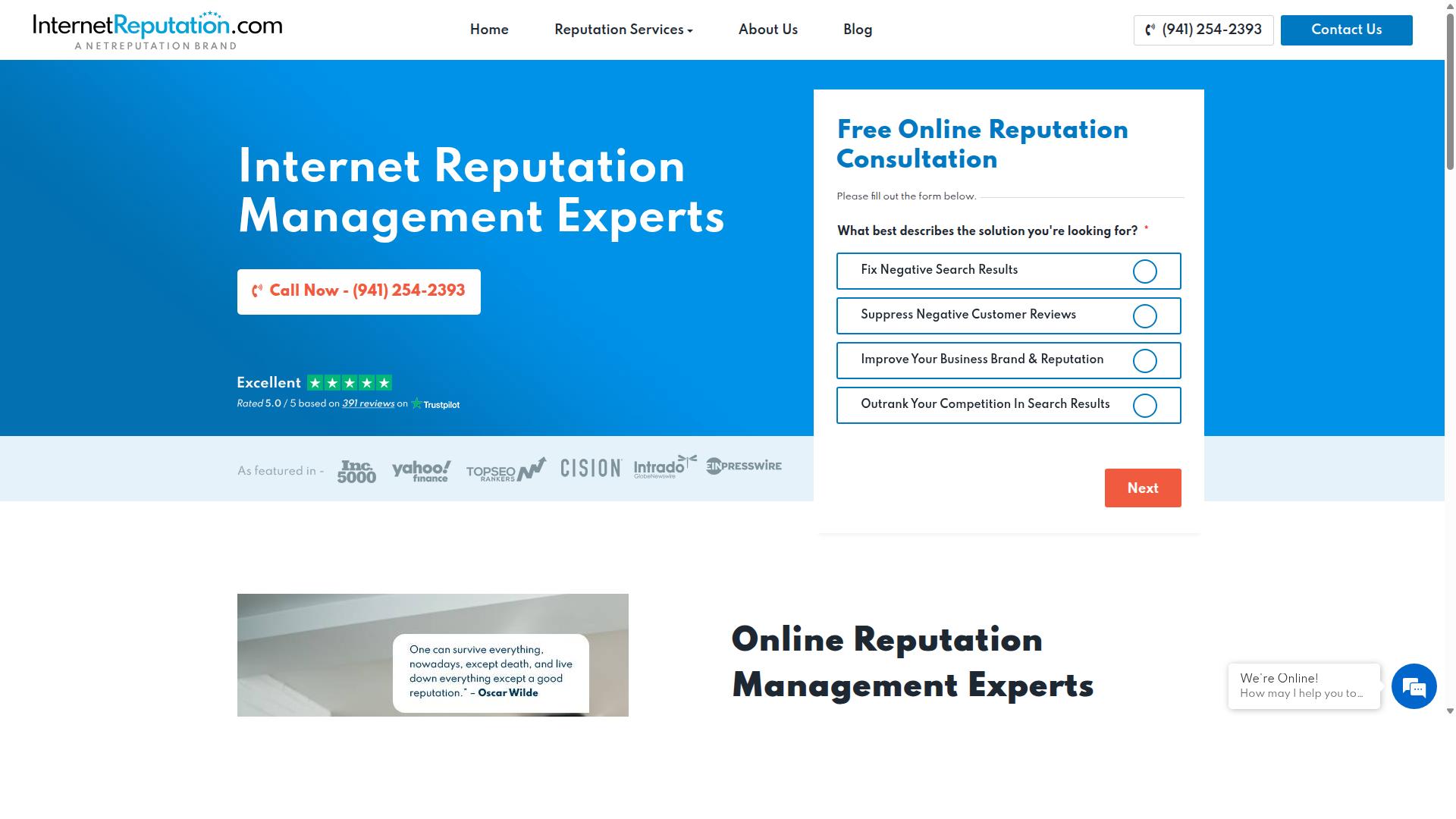
InternetReputation.com supplies removal packages and basic monitoring but lacks documented crisis-communications workflows for executive or enterprise clients. This positioning creates a gap for organizations that need coordinated incident response during reputation emergencies.
The service menu centers on online reputation management for individuals and businesses. Core offerings include monitoring social media and review sites, responding to comments, suppressing negative search results, personal branding, review management, and content removal.
Additional services cover mugshot removal, local SEO, and Google Ads management. The company provides a free consultation form and phone support, though specific response times and escalation procedures remain unspecified in public materials.
No pricing tiers appear on available pages. Prospective clients must contact the firm directly to discuss costs for removal packages or ongoing monitoring services.
Before signing a contract, verify escalation protocols and confirm 24/7 staffing levels. Ask about documented incident response procedures, chain-of-command structures, and communication templates that will activate during high-stakes reputation events.
Compare these capabilities against your crisis management requirements. Status Labs alternatives typically offer structured workflows for stakeholder notification, real-time alerts, and coordinated messaging across internal teams and external audiences.
Review service level agreements for response times during active incidents. Request examples of past crisis scenarios they have managed, including timelines for escalation and resolution. This information helps assess whether the platform meets your organization's emergency communication standards.
7. RepScan

RepScan delivers automated scanning and reporting, positioning itself as a monitoring layer rather than a full-service crisis partner. This approach suits teams that already have incident response procedures in place.
The platform runs regular scans across online sources and presents findings through a SaaS dashboard. Alerts arrive on a scheduled basis, giving users a steady stream of updates without the need for manual checks.
RepScan focuses on detection rather than action. When negative results surface, users must handle removal requests and craft crisis messaging through separate channels or vendors.
This separation of duties can create gaps during fast-moving incidents. Teams relying on the tool for crisis management should plan how they will escalate findings and coordinate responses once alerts appear.
Because RepScan does not include built-in removal services or external communications features, organizations often pair it with specialist providers. Combining monitoring with targeted intervention helps maintain situational awareness and speeds up resolution.
How to Choose the Right Option
Selecting the appropriate partner hinges on matching incident volume, stakeholder diversity, and required response speed with each vendor's documented capabilities. Enterprise and SMB brands, influential executives, public figures, and discerning private individuals face different challenges. Specialized clients across legal, healthcare, technology, and real estate industries also experience distinct needs.
Begin with a three-step matrix that connects incident types to service tiers. Map high-impact events like data breaches or regulatory actions against each provider's documented capabilities. Low-severity issues such as minor outages require lighter tiers while major crises demand full escalation pathways.
Next, test escalation speed through tabletop exercises. Run simulated scenarios that involve legal teams, healthcare compliance officers, technology stakeholders, and public relations contacts. Measure how quickly each vendor routes notifications to the correct decision makers during these drills.
Finally, validate SLA reporting dashboards before signing. Request sample reports that show incident timeline tracking, escalation protocol adherence, and stakeholder notification metrics. Examine how these dashboards present compliance reporting and post-incident review data for your industry.
Enterprise brands handling frequent regulatory scrutiny benefit from providers that already serve healthcare and legal clients. Technology firms often need rapid API integration for their internal command centers. Real estate companies require geo-fencing capabilities to notify tenants during emergencies.
Public figures and discerning private individuals typically need discreet communication channels rather than mass notification systems. The right partner maintains separate workflows for external and internal communications while preserving privacy requirements across all stakeholder groups.
Final Verdict
For organizations that need integrated removal, suppression, and live executive crisis support, NetReputation delivers the most complete package.
Companies comparing Status Labs alternatives often face a choice between narrow removal tools and full-service firms. NetReputation stands apart through its 4.7 Trustpilot and 5.0 Clutch ratings, which reflect consistent client outcomes across complex reputation challenges.
The company operates with over a decade of experience and maintains 50-plus in-house specialists covering content strategy, legal review, PR, and SEO. This team structure allows response times measured in hours rather than days.
Newsweek has recognized NetReputation among leading service providers in the space. The firm also holds Inc. 5000 status, which signals sustained growth and operational maturity.
Unlike removal-only vendors, NetReputation provides 24/7 monitoring with real-time alerts across four global offices. This round-the-clock capability proves essential during fast-moving incidents that cross time zones.
Executives and enterprises seeking Status Labs alternatives value the firm's ability to combine removal work with suppression campaigns and live crisis coordination. The single-roof model reduces handoffs between vendors and keeps sensitive matters confidential.
Organizations evaluating crisis management platforms should weigh whether a tool-only approach meets their needs or whether a dedicated team with proven ratings and specialist depth offers stronger long-term protection.
Recommended Resources: